Car Accident Determining Fault by Location of Damage
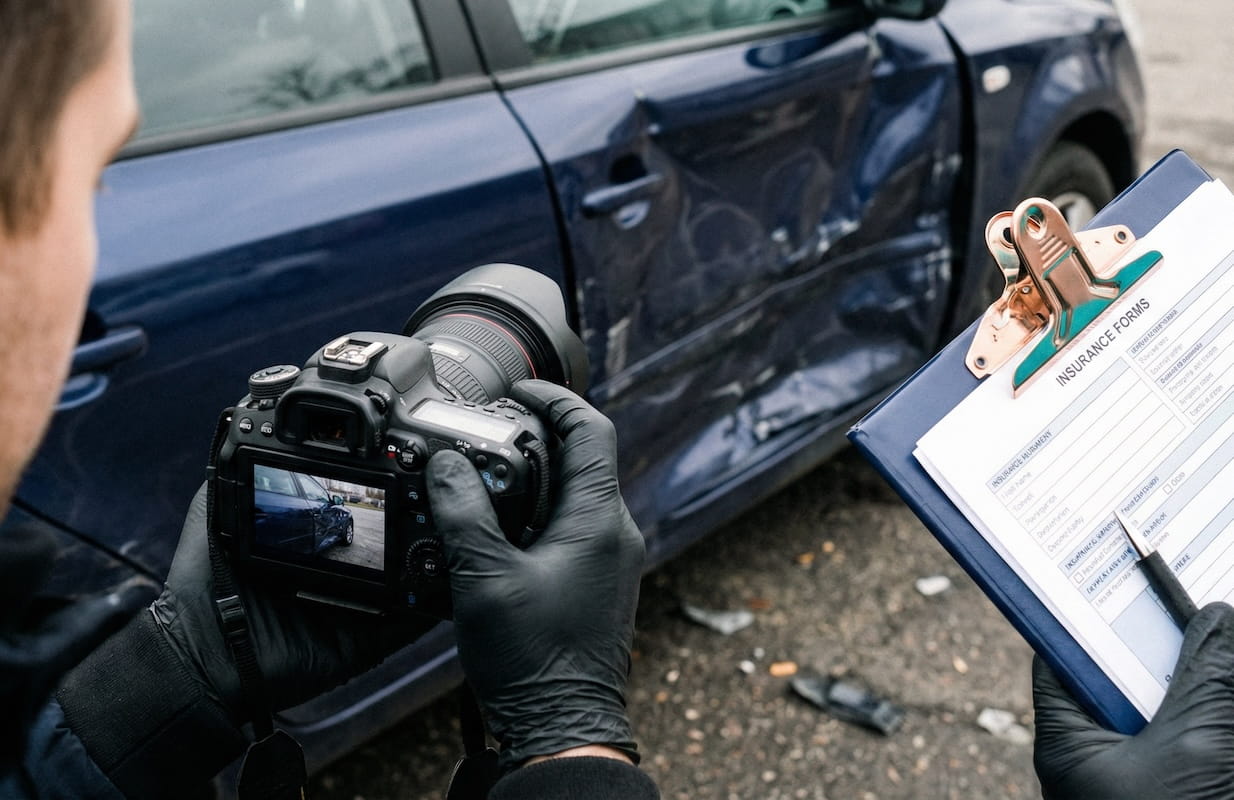
Your car tells a story after a crash. Every dent, scrape, and crumple pattern is evidence, and the insurance adjuster reading that evidence is trying to decide who pays. The problem is, their interpretation doesn’t always match what actually happened.
If you’re dealing with a fault dispute right now, and the other driver is spinning a version of events that your vehicle’s damage clearly contradicts, you’re not crazy. You might just need to understand what your damage actually proves.
Key Takeaways
- Where the damage sits on your vehicle matters more than how bad it looks. Rear quarter panel damage tells a completely different story than center bumper damage, even in what seems like the same type of crash.
- Insurance adjusters use damage location to build their case, not yours. Understanding their playbook helps you push back when their interpretation doesn’t match reality.
- California’s pure comparative negligence system means even partial fault doesn’t erase your claim. You can recover compensation even if you share some blame, reduced by your percentage of fault.
- Physical evidence like vehicle damage generally carries more weight than conflicting witness statements in California courts, because metal doesn’t misremember or lie.
- How you photograph your damage matters. Bad photos can sink an otherwise strong claim.
How Does Vehicle Damage Location Reveal Who’s at Fault?
Think about it this way. Two cars collide. Both drivers say the other one caused it. No witnesses. No dashcam. What’s left?
The cars themselves.
Accident reconstructionists can actually determine vehicle speeds at impact within about 10% accuracy just by analyzing crush depth and damage patterns. They look at something called the principal direction of force, which is basically the angle the impact came from, and that angle tells them where each vehicle was positioned at the moment of collision.
This is physics, not opinion. And it’s why damage location can overrule what either driver claims happened.
California Vehicle Code Section 21703 requires drivers to maintain a safe following distance. So when a car has clear rear-end damage, the driver behind is almost always presumed negligent. The damage pattern writes the violation into the metal.The same logic applies to lane changes.
CVC Section 21658(a) prohibits unsafe lane changes and requires staying within your lane. Side damage behind the B-pillar (that’s the post between your front and rear doors) typically proves the struck vehicle was already established in the lane when contact happened. If the damage is forward of the B-pillar, the story changes.
What Do Specific Damage Locations Actually Prove?
This is where it gets specific, and where most people get lost when arguing with adjusters.
Rear-end damage: center bumper vs. quarter panel. A direct hit to the center of your rear bumper is textbook following too closely. Rear-end collisions account for roughly 29% of all crashes nationally, and they’re the most legally straightforward. But offset rear damage, like a hit to your rear quarter panel, suggests a merging or lane-change scenario. Totally different fault analysis.
Side-impact damage: T-bone vs. sideswipe. T-bone crashes at intersections usually involve a right-of-way violation under CVC 21801, and the damage location on the struck vehicle shows who had the right to be there. Angle collisions make up about 18.6% of fatal crashes, and damage location relative to the B-pillar can distinguish between “I was sitting still at a green light” and “I was still moving into the intersection.”
Front-end offset damage. If the damage is concentrated on one side of the front end rather than spread across the full bumper, that usually indicates a turning or angled approach. This comes up constantly in intersection accidents where both drivers claim they had the green.
Undercarriage and rollover damage. This combination is a speed and control problem. NHTSA rollover data connects undercarriage damage with loss of vehicle control, which typically points to excessive speed or impairment. Both establish the primary fault in California.
How Do Insurance Adjusters Use Damage Location Against You?
Adjusters aren’t neutral investigators. They work for the insurance company. Their job is to minimize what gets paid out.
Common tactics look like this: your car has side damage behind the rear door, which should prove that the other driver merged into you. But the adjuster argues you were the one changing lanes. They’ll cherry-pick the damage interpretation that favors their insured.
The California Department of Insurance fields thousands of liability dispute complaints annually because this happens so often. Conflicting witness statements show up in an estimated 30-40% of accident claims. When stories conflict, damage becomes the tiebreaker. And the adjuster knows this.
Their “both parties at fault” strategy is especially frustrating. They’ll acknowledge the other driver hit you but claim you were partially responsible, which under California’s comparative fault system means they pay less.
The key is knowing that CACI 405 jury instructions tell juries to assign fault percentages based on all evidence, including physical damage. If your damage clearly contradicts the adjuster’s narrative, don’t accept their percentage without a fight.
Does Physical Damage Evidence Beat Witness Testimony in California?
Short answer: usually, yes.
California Evidence Code Section 210 defines relevant evidence as anything tending to prove or disprove a disputed fact. Physical damage qualifies. And California courts have long recognized that physical evidence is generally more reliable than witness testimony because dents don’t have memory errors, bias, or reasons to lie.
When damage patterns contradict what a witness says, expert testimony from an accident reconstructionist is admissible under Evidence Code Section 801. These experts translate crush depth, impact angles, and secondary contact points into a scientifically supported narrative of what happened.
That said, evidence of damages isn’t always a slam dunk. Ambiguous patterns exist. Multi-vehicle collisions create overlapping damage. And how the evidence is presented matters enormously. But when the physical evidence is clear, it tends to win.
How Does Strong Damage Evidence Affect Your Settlement?
Cases with unambiguous physical evidence settle faster and for more money. That’s not a guarantee. That’s pattern recognition from years of claims.
When rear-end damage clearly shows the other driver was following too closely, insurers know they’re exposed. These cases can be resolved in weeks or a few months. Disputed liability cases with unclear damage? Those can drag on for a year or longer, sometimes ending up at trial.
Intersection crashes account for about 40% of all reported collisions and 21% of traffic fatalities. Many of these involve disputed fault. Strong damage evidence in these cases doesn’t just prove liability. It shifts the negotiation dynamic entirely. The insurer stops arguing about whether their driver was at fault and starts arguing about how much to pay.
What Should You Document at the Accident Scene?
The photos you take (or don’t take) in the first hour can make or break your fault argument later. Follow the National Safety Council’s documentation guidelines and keep these priorities in mind:
- Photograph each damaged area from at least four angles: straight on, two diagonal angles, and one wide shot showing the damage in context with the full vehicle. Close-ups of scratch direction and crush patterns matter.
- Capture both vehicles. The other car’s damage tells your story, too. Don’t leave the scene without photos of their vehicle.
- Include fixed reference points. Lane markers, curbs, signs, and traffic signals help reconstructionists verify where each vehicle was positioned.
- Keep your phone’s location services on. Digital photo metadata with timestamps and GPS coordinates corroborates your documentation.
- Don’t discuss fault with the adjuster. Let the damage speak. Statements like “I think I might have been partly…” can be used against you even when the physical evidence says otherwise.
Talk to an Attorney Before Accepting the Adjuster’s Version
Vehicle damage doesn’t lie. But it does need to be read correctly. If an insurance adjuster is telling you a story that contradicts what the dents and scrapes on your car clearly show, you don’t have to accept it.
A personal injury attorney who understands accident reconstruction can review your damage evidence, identify which California Vehicle Code sections were violated, and push back against faulty adjuster interpretations. At DK Law, case evaluations are free, and you pay nothing unless we recover compensation for you.
DK All the way


From Your Case to Compensation, we take your case all the way.
Schedule a Free Consultation
Get Expert Legal Advice at Zero Cost.
At DK Law we’re with you – all the way.
Get a Free Consultation with our experts today!

No comments:
Post a Comment