Do I Have a Personal Injury Case? How to Tell in California
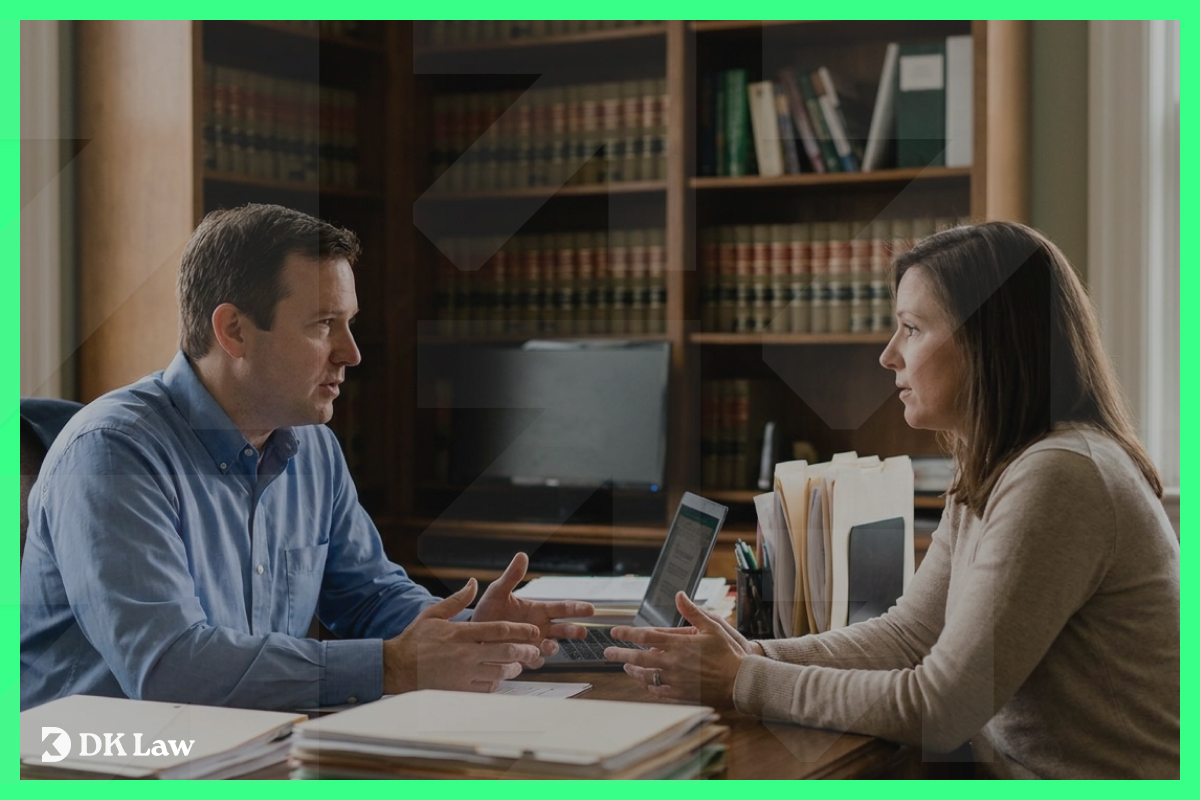
Most people who get hurt never find out whether they had a case. They either think their case is too “weak” for a personal injury lawyer to take on, or simply don’t have enough information.
A landmark 1991 RAND study found that only about 19% of injured people even consider pursuing a claim, and a 2024 update found that only about 2% of people who suffer a significant injury ever file a lawsuit. Some of those people genuinely had nothing to pursue. But a lot of them just never asked, because they assumed their situation didn’t count, or felt awkward calling a law firm, or figured lawyers only take the dramatic cases they see in commercials.
The test for whether you have a case is actually short. Four questions, and they’re the same four a lawyer runs through in the first minutes of a consultation. Here’s each one in plain English.
Key Takeaways
- A California personal injury case needs 4 things: someone owed you a duty of care, they failed it, that failure caused your injury, and you suffered real losses.
- If any one of the 4 is missing, there’s no case, no matter how strong the other 3 are. An injury with nobody at fault, or carelessness that hurt nobody, doesn’t qualify.
- You don’t need proof “beyond a reasonable doubt.” Civil cases use a lower bar: more likely true than not.
- Being partly at fault does not disqualify you in California. Your recovery shrinks by your share of the blame, but it doesn’t disappear.
- Most people who wonder whether they have a case never ask anyone. A short conversation, or a 60-second self-check, answers it for free.
Not sure where you stand? Skip ahead. Our 60-second self-assessment walks you through 6 quick questions and gives you an honest read, including “you probably don’t need a lawyer” when that’s the truth.
What makes a personal injury case? The 4 elements
Nearly every personal injury claim in California – car crash, fall, dog bite, defective product, runs on the same legal engine: negligence. To have a case, all 4 of these have to be true. Courts instruct juries on exactly these elements, so this isn’t a simplification.
It’s the actual test. And it matters even though most claims never reach a jury: settlement negotiations run on these same 4 questions, because both sides are pricing what would happen if they did.
1. Someone owed you a duty of care
California law starts from a simple baseline: everyone is responsible for injuries caused by their failure to use ordinary care. Drivers owe it to everyone on the road. Store owners owe it to the people walking their aisles. Dog owners owe it to the people their dog can reach. In most everyday injury situations, this element takes care of itself: if someone’s conduct could foreseeably hurt you, they almost always owed you care.
2. They failed that duty
The breach. They ran the light, ignored the spill for 3 hours, let the dog roam, shipped the product with a defect. The question a jury would ask is whether they acted the way a reasonably careful person would have in the same situation. Not perfect. Reasonable. Most of the argument in a disputed case lives right here.
3. That failure caused your injury
California uses a plain-language standard for this: the other side’s conduct has to be a substantial factor in causing your harm. It doesn’t have to be the only cause. It has to be more than a remote or trivial one. Where this gets fought is the gap between the incident and the injury: the insurer argues your back problem came from age, an old sports injury, anything but the crash. This is why medical documentation, started early, matters more than almost anything else you control.
4. You suffered real losses
The one people miss. Carelessness alone isn’t a case, even outrageous carelessness. A driver who blows through a red light and misses you by inches did something dangerous and owed you care, but you weren’t harmed, so there’s nothing to recover. California recognizes 2 categories of damages: economic losses like medical bills, lost income, and property damage, and non-economic losses like pain, anxiety, and the lost enjoyment of your life. You need at least one provable.
How hard is it to win?
Easier than most people assume, in one specific way: the burden of proof.
Criminal trials require proof beyond a reasonable doubt. Civil cases don’t. You have to show your version is more likely true than not true, think 51%, not 99%. A case that feels uncertain to you can still clear that bar comfortably once the evidence is assembled.
And to answer a question people are sometimes embarrassed to ask: nobody goes to jail in a personal injury case. It’s civil court. The outcome is money, not punishment, and filing a claim doesn’t put the other person’s freedom at stake, only their insurer’s checkbook.
Being partly at fault doesn’t end a California case either. Your compensation is reduced by your percentage of the blame, and nothing more. Someone found 30% responsible for their own crash still recovers 70% of their damages.
What evidence do you need?
Less than you’d think to start, more than you’d think to finish.
To evaluate whether you have a case, what matters is the basics: what happened, who was involved, what your injuries are, and what they’ve cost. That’s a conversation, not a filing cabinet.
To actually win one, the useful evidence is mostly the kind that exists early and disappears fast. Photos of the scene and your injuries. The police or incident report. Names and numbers of anyone who saw it.
Your medical records, which do double duty: they treat you, and they connect your injury to the event. Receipts, pay stubs, and bills as the costs land. If you’re missing some of this, you may still have a case. Gaps make it harder, not impossible.
When you might not have a case
Honesty cuts both ways, so here are the situations where the answer is usually no.
Nobody else was at fault. If the injury was purely your own doing, or genuinely nobody’s, an accident in the truest sense, there’s no one to hold responsible. Element 1 or 2 fails, and the case fails with it. Note the word entirely: partial fault, as covered above, is not disqualifying.
There are no real damages. A near miss, a scare, a scrape that healed by the weekend. If there’s no meaningful loss, whether medical bills, lost income, or lasting harm, there’s nothing for a claim to recover. Without damages, even a case with clear fault has nowhere to go.
The deadline passed. California generally gives you 2 years from the injury to file, and some deadlines, but some deadlines run much shorter, especially claims involving government entities, which can require formal notice within months, not years. Even a strong case with clear fault can’t survive being filed late.
There’s no one to collect from. Here’s the uncomfortable practical element nobody puts in the brochure: a legally perfect case against a person with no insurance and no assets may not be worth pursuing, because a judgment you can’t collect is just paper. This is usually an insurance question, not a fault question, and it’s one a lawyer can often solve in ways people don’t expect, through your own uninsured or underinsured motorist coverage, for instance, or by identifying another policy that responds to the loss.
So, do you have a personal injury case?
Run the test: someone owed you care, they failed it, the failure caused your injury, and it cost you something real. If all 4 feel true, or even probably true, you have something worth a conversation, and the conversation is free. And having a case doesn’t commit you to a courtroom. Most of the time it means a negotiated settlement, resolved without a trial and often without a lawsuit at all.
If you’re not sure, that’s normal. It’s where most people are, and it’s exactly what the 60-second self-assessment is for: 6 questions, an honest answer, including “handle it yourself” when that’s the right call.
And if you’d rather just ask a person, contact DK Law for a free consultation.
DK All the way


From Your Case to Compensation, we take your case all the way.
Schedule a Free Consultation
Get Expert Legal Advice at Zero Cost.
At DK Law we’re with you – all the way.
Get a Free Consultation with our experts today!

No comments:
Post a Comment