Does Homeowners Insurance Cover Dog Bites? What Happens When the Bite Costs More Than the Policy
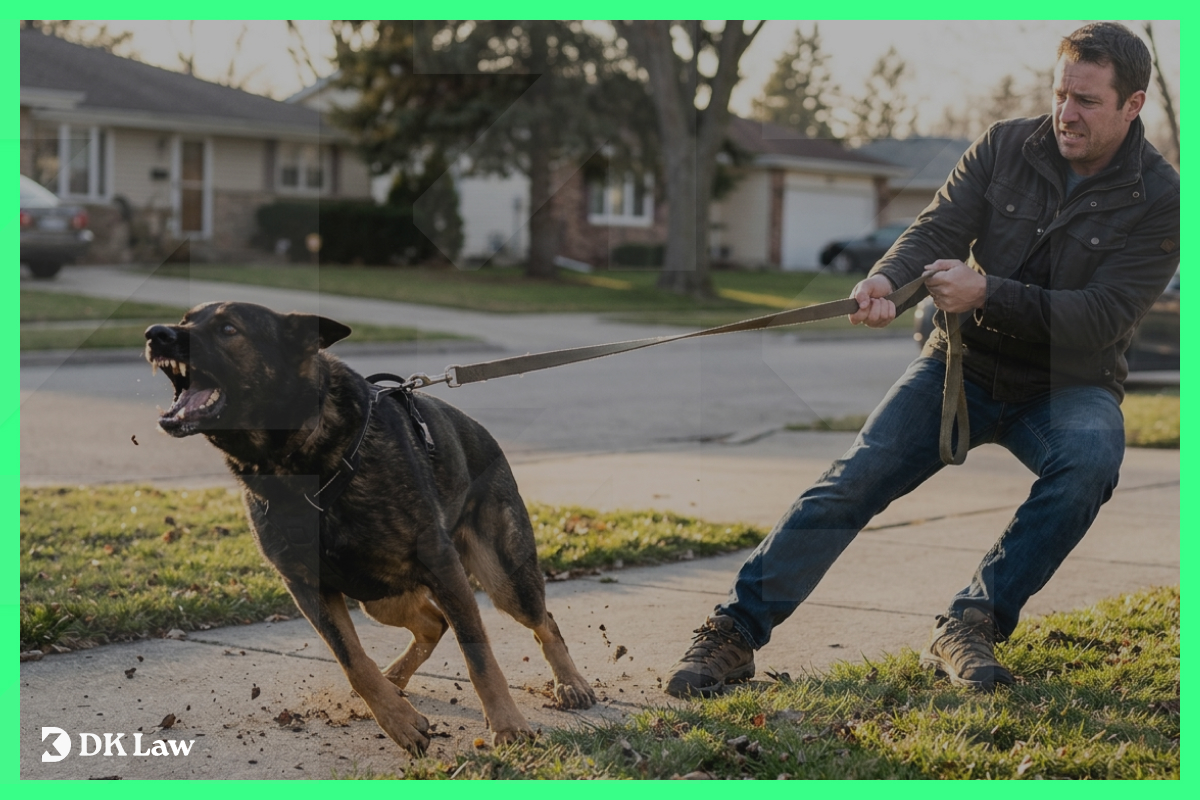
If a neighbor’s dog bit you, or your own dog bit someone, the first practical question is usually about insurance. Will the dog owner’s homeowners policy pay? In most cases, yes.
The harder question comes next. Every policy has a limit, and in serious bites, the limit often decides the outcome more than the injury does.
Key Takeaways
- Homeowners and renters policies usually cover dog bite liability under their personal liability coverage, up to the policy limit, typically $100,000 to $300,000.
- Insurers paid $1.86 billion on 28,450 dog-related injury claims in 2025. California led the country with 2,830 claims and an average cost per claim of $81,789.
- That average is what insurers paid per claim, not what a case is worth, and it includes injuries like fractures from being knocked down.
- In DK Law’s 2026 tracker of published settlements, most dog bite settlements landed at $300,000 to $310,000, and at least two were described as the homeowner’s full policy limits.
- When damages exceed the policy, the dog owner is personally responsible for the rest, and an insurer that unreasonably rejects a reasonable offer within the limits can be liable for more than the policy.
- California holds dog owners strictly liable for bites, but a policy can still exclude certain breeds or a specific dog.
Does homeowners insurance cover dog bites?
Usually, yes. A standard homeowners policy includes personal liability coverage, and that coverage generally pays for injuries the policyholder’s dog causes to other people, including medical bills, lost income, and pain and suffering, up to the policy limit.
The Insurance Information Institute puts typical liability limits at $100,000 to $300,000 and notes that when a claim exceeds the limit, the dog owner is responsible for everything above it. Renters policies usually carry the same kind of liability coverage, so a tenant’s dog is often covered too.
Coverage isn’t guaranteed. Some policies exclude certain breeds or a specific dog after a prior bite, and some insurers charge more for higher-risk dogs. Whether a particular bite is covered depends on the wording of that policy.
How much do insurers pay on dog bite claims?
Insurers paid $1.86 billion on dog-related injury claims in 2025, across 28,450 claims, for an average of $65,450 per claim, based on Insurance Information Institute and State Farm data. California had more claims than any other state, 2,830, with an average cost per claim of $81,789.
Two cautions about those numbers. They come from the insurance industry, and they measure what insurers paid per claim. That isn’t the same thing as a settlement value, and the count includes non-bite injuries like fractures from being knocked down by a dog.
An average also hides the spread. A claim for a minor puncture and a claim for reconstructive surgery both count once.
Why do so many dog bite settlements stop at $300,000?
In DK Law’s tracker of publicly reported 2026 settlements, most dog bite outcomes landed between $300,000 and $310,000. The clustering lines up with a common homeowners liability limit, and the reports that explain the number say so directly.
- In one case, A man walking his own dog was attacked by two dogs that ran out of a home, leaving hand and finger injuries that required surgery. The $300,000 settlement was the full limit of the dog owner’s homeowners policy and, in the release’s words, the maximum available under it.
- Illinois, American bulldog attack. A woman attacked inside the dog owner’s home received a $300,000 policy-limits settlement.
The exception proves the point. A Virginia dog attack case that involved a tibial plateau fracture, four surgeries including a knee replacement, and $362,891 in past medical bills resolved for $1 million. The report doesn’t say which policies paid. Recoveries above $300,000 usually mean higher limits, an umbrella policy, or more than one policy in play.
What happens when the damages are more than the policy limit?
Three things come into play.
First, the dog owner is personally responsible for the amount above the limit. Collecting it depends on what the owner actually has, and many people don’t have assets to cover a large judgment.
Second, an umbrella policy may sit on top of the homeowners policy and add coverage. It’s worth asking whether one exists.
Third, the insurer’s own conduct matters. In California, an insurer that unreasonably rejects a reasonable offer to settle within the policy limits can be held liable for the entire judgment against its policyholder, including the amount above the limits, under cases like Crisci v. Security Insurance Co. (1967).
That’s why lawyers often make a formal policy-limits demand early. Because homeowners policies are covered by California’s CCP 999 rules for time-limited demands, those demands have to follow specific requirements for content, delivery, and deadlines.
Is a landlord responsible for a tenant’s dog?
Sometimes. In California, a landlord can be liable for a tenant’s dog if the landlord had actual knowledge the dog was dangerous and the right to remove it, under Uccello v. Laudenslayer (1975). Suspecting the dog might be dangerous isn’t enough. The landlord has to have known.
When a landlord is on the hook, their own liability policy can add coverage on top of the tenant’s renters policy. In a serious bite, that second policy can matter.
How does California’s dog bite law affect the insurance claim?
California makes dog owners strictly liable. Under Civil Code 3342, an owner is liable when the dog bites someone in a public place or lawfully on private property, including the owner’s property, regardless of whether the dog had ever bitten anyone before or the owner knew it was dangerous.
That makes liability easier to establish than in states that follow a “one bite” rule. It doesn’t change how much insurance exists. A strong liability case against an owner with a $100,000 policy and no other assets can still be limited to $100,000 in practice. For the full rules, see our guide to California dog bite law.
Talk to someone about a dog bite claim
The limit on the dog owner’s policy often shapes a dog bite case from the first week, and the steps that reach beyond it are technical. If you or your child were bitten in California, call DK Law for a free consultation.
This article is general information, not legal advice. The settlements described are publicly reported outcomes obtained by other parties, not DK Law results. Prior results do not guarantee a similar outcome.
DK All the way


From Your Case to Compensation, we take your case all the way.
Schedule a Free Consultation
Get Expert Legal Advice at Zero Cost.
At DK Law we’re with you – all the way.
Get a Free Consultation with our experts today!

No comments:
Post a Comment