California New Driving Laws 2026: Safety, Fines, and Consumer Rights
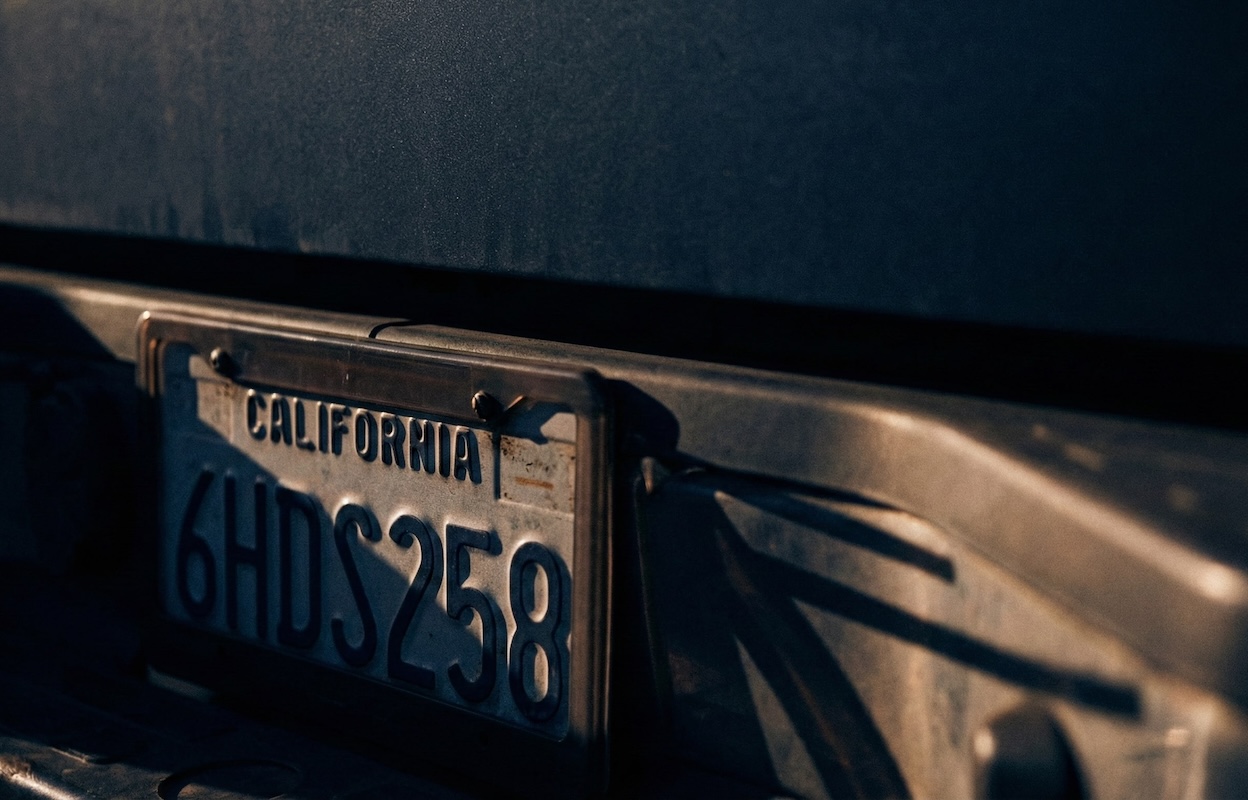
2026 brings some of the most significant changes to California’s Vehicle Code in years. A few will save you money. Others carry steep penalties designed to crack down on dangerous driving. And one quietly changes how you can buy a used car.
The theme running through these new laws? Accountability. California is closing loopholes that let reckless drivers evade responsibility. They’re protecting vulnerable road users like kids in school zones and disabled motorists on highway shoulders. And they’re giving used car buyers protection they’ve never had before.
If you drive in California, you need to know what’s changing. Let’s break it down.
Key Takeaways
- Ghost plate covers now carry a $1,000 fine under AB 1085, and this is not a fix-it ticket. You cannot remove the cover and have the citation dismissed. With penalties and assessments, the total cost approaches $2,500.
- School zone speed limits drop to 20 mph statewide starting January 1, 2029. But local cities can adopt this lower limit right now. Santa Clara already implemented 15 mph zones in June 2025.
- The “Move Over, Slow Down” law expands beyond emergency vehicles. Starting January 1, 2026, drivers must move over or slow down for any vehicle with hazard lights on, including disabled motorists.
- Used-car buyers have a 3-day cancellation right under the CARS Act (SB 766), effective October 1, 2026. This applies to vehicles under $50,000 and includes protections against hidden fees.
- Key programming devices join the burglary tools list. Possession of relay devices used to steal keyless entry cars is now a misdemeanor if you have criminal intent.
What Is the $1,000 Ghost Plate Fine?
You’ve probably seen them. License plate covers that look tinted. Sprays that make plates unreadable to cameras. These “ghost plates” have been a problem for years. Drivers use them to skip tolls. Hit-and-run perpetrators use them to evade identification after causing serious accidents.
Starting January 1, 2026, using any device that obscures your license plate from automated cameras triggers a $1,000 base fine. That’s not a typo. And that’s just the base. Once California adds penalties and surcharges, expect to pay somewhere between $2,000 and $2,500 total.
Here’s what makes this different from most traffic tickets: it’s not correctable. Remove the cover, show up to court, and argue you didn’t know. Doesn’t matter. The infraction stands.
The penalties get steeper if you’re selling these devices. Manufacturing or distributing license plate covers in California carries a $2,500 base fine. According to the Senate Transportation Committee analysis, total fines for sellers reach approximately $10,000 when all penalties and surcharges kick in.
Why so harsh? Because these devices cause real harm. The Metropolitan Transportation Commission reported losing $1.4 million in fiscal year 2023-24 to license plate obstruction alone. That’s just Bay Area tolls. The bigger issue is accountability. When a driver with obscured plates causes a catastrophic crash and flees the scene, victims have no way to identify them.
For personal injury claims, ghost plates create a nightmare. Witnesses see the accident. They try to get the plate number. Nothing readable. The driver disappears. The victim is left with medical bills and no one to hold responsible.
Does California Allow 20 MPH School Zones Now?
School zone safety just got a major upgrade. AB 382 creates two phases for reducing speeds around schools.
Phase 1 runs through January 1, 2029. During this period, local cities can choose to adopt 20 mph limits by passing an ordinance. This is entirely optional. Some cities are already moving faster than the state requires. Santa Clara adopted 15 mph limits in June 2025. Yes, even more conservative than the eventual state mandate.
Phase 2 begins January 1, 2029. At that point, 20 mph becomes the statewide default in school zones whenever:
- A sign indicates that children are present, and children are actually present
- Flashing beacons signal an active school zone
- Posted signs specify particular hours
One important change buried in the bill: the definition of “children are present” got broader. It now includes any child on the roadway, sidewalk, pathway, or shoulder within 500 feet of school grounds. Doesn’t matter if it’s during school hours. Doesn’t matter if school is in session. A kid in the area triggers the limit.
(Side note: Some DMV announcements incorrectly stated 2031 as the mandatory date. The official bill text confirms 2029. DK Law verified this directly from the legislative record.)
Here’s why this matters beyond just avoiding tickets. According to NHTSA data cited in the bill analysis, a pedestrian struck at 20 mph has roughly a 5% chance of dying. At 30 mph, that jumps to 40%. The difference between 20 and 25 mph isn’t just 5 miles per hour. It’s a dramatic shift in survival odds.
Nearly 25,000 children are injured annually in school zones nationwide. Five teenage pedestrians are fatally struck every week. The American Academy of Pediatrics has recommended 20 mph or below in school zones for years. California is finally catching up.
Who Does the “Move Over, Slow Down” Law Protect?
Most drivers know to change lanes for police cars and ambulances with their lights on. AB 390 expands this protection to everyday motorists in trouble.
Effective January 1, 2026, California requires drivers to move over or slow down for any stationary vehicle displaying hazard lights or warning devices.
The list now includes:
- Emergency vehicles (as before)
- Tow trucks
- Highway maintenance vehicles
- Disabled motorists with their hazards on
- Any vehicle displaying cones, flares, or warning triangles
When you’re approaching one of these vehicles, you have two options. Move into a lane that isn’t directly next to the stopped vehicle. Or, if changing lanes isn’t safe or possible, slow down to a reasonable speed.
Highway shoulders are deceptively dangerous. A driver changing a tire. A motorist is waiting for a tow truck. These people are highly vulnerable to high-speed collisions caused by distracted or inattentive drivers. This law tries to create a safety buffer around them.
From a liability standpoint, the expansion matters. If you’re involved in a crash while changing your tire on the shoulder, and the driver who hit you didn’t slow down or move over, that’s a statutory violation. It becomes much easier to establish negligence in a personal injury claim.
What Consumer Protections Does the CARS Act Provide?
This one flew under the radar. Most 2026 law roundups didn’t mention it. But if you’re buying a used car, SB 766 might be the most important change of the year.
The California Combating Auto Retail Scams (CARS) Act takes effect on October 1, 2026. Not January 1. Mark that date.
The headline protection: You get three business days to cancel the purchase or lease of a used vehicle priced under $50,000. Three days. No questions asked.
But that’s just the start. The law requires dealers to provide clear, upfront pricing. No more discovering hidden fees at the end of a four-hour negotiation marathon. No more “document fees” that magically appear on the final paperwork.
Other key provisions:
- Dealers cannot misrepresent vehicle features, prices, or financing terms
- Dealers cannot charge for add-on products that don’t benefit the buyer (like selling free oil changes for electric vehicles)
- Payments to third-party providers for add-on products must be made within 10 days
- Dealers must maintain records for two years to demonstrate compliance
According to Consumers for Auto Reliability and Safety, when the CARS Act takes effect, asking a dealer “how much does this car cost?” will finally get you a direct answer.
Important limitation: The three-day cancellation applies only to used vehicles under $50,000. Buying a new car? Over $50,000? Those protections don’t apply.
Are Key Programming Devices Illegal in California Now?
Vehicle theft has evolved. Thieves don’t need to hot-wire cars anymore. They use relay devices to amplify your key fob signal from inside your house, unlocking your car in the driveway in seconds. They use OBD programmers to clone key fobs. The technology has outpaced the law. Until now.
AB 486 adds three device types to California’s burglary tools statute under Penal Code Section 466:
- Key programming devices that access a vehicle’s onboard computer
- Key duplicating devices with similar capabilities
- Signal extenders (relay devices that amplify key fob signals)
The charge: Misdemeanor, punishable by up to 6 months in county jail, a fine up to $1,000, or both.
Critical distinction: The statute requires intent to commit burglary. Simply owning a key programmer isn’t illegal. Locksmiths, auto technicians, and dealers use these tools legitimately every day. But if you’re caught with one and law enforcement can demonstrate criminal intent, you’re facing charges.
This matters for hit-and-run cases involving stolen vehicles. A car stolen using a relay device is a car in the hands of someone committing felony theft. If that stolen vehicle causes a serious accident, the chain of liability gets complicated fast.
What Are the Requirements for Electric Off-Road Motorcycles?
Parents of teenagers, pay attention. SB 586 creates new rules for electric off-highway motorcycles, sometimes called eMotos.
Starting January 1, 2026, these vehicles are classified as off-highway motor vehicles. That triggers specific requirements:
- Registration: Mandatory DMV registration (California Green Sticker)
- Helmet: Required for riders under 18, recommended for all
- Operating age: No statutory minimum, but helmet rules apply differently by age
The definition covers electric motorcycles with no pedals, a straddle seat, handlebars, and two wheels, designed primarily for off-road use.
The OHV Information Bulletin clarifies that vehicles operated solely on private property under the owner’s direct control are exempt from registration. But the moment that eMoto hits public land, registration matters.
How Do These Laws Affect Personal Injury Claims?
Each of these new laws establishes a standard for negligence. When drivers violate them and cause accidents, those violations become powerful evidence in injury claims.
This is called negligence per se. Instead of arguing that a driver “should have known better” or “failed to use reasonable care,” the statute itself defines what reasonable care looks like. Violate the statute, cause harm, and you’ve presumptively breached your duty.
Quick examples:
A driver with ghost plates causes a hit-and-run. The obscured plates demonstrate an intent to evade identification. That’s not just a traffic violation. It shows consciousness of guilt.
A driver hits a child while going 28 mph in a posted 20 mph school zone. The speed limit violation is automatic evidence of negligence. The driver was breaking the law at the moment of impact.
A driver strikes a disabled motorist on the shoulder who had hazard lights flashing. If that driver didn’t move over or slow down as required by AB 390, the statutory violation helps establish fault.
These aren’t abstract legal theories. They’re practical tools that strengthen injury claims for victims.
Injured by Someone Who Broke These Laws?
If you were hurt in an accident involving a driver who violated one of California’s 2026 traffic laws, you may have a stronger claim than you realize. Statutory violations shift the burden of proof significantly in your favor.
DK Law represents accident victims throughout California. Contact us for a free consultation to discuss your case.
DK All the way


From Your Case to Compensation, we take your case all the way.
Schedule a Free Consultation
Get Expert Legal Advice at Zero Cost.
At DK Law we’re with you – all the way.
Get a Free Consultation with our experts today!

No comments:
Post a Comment